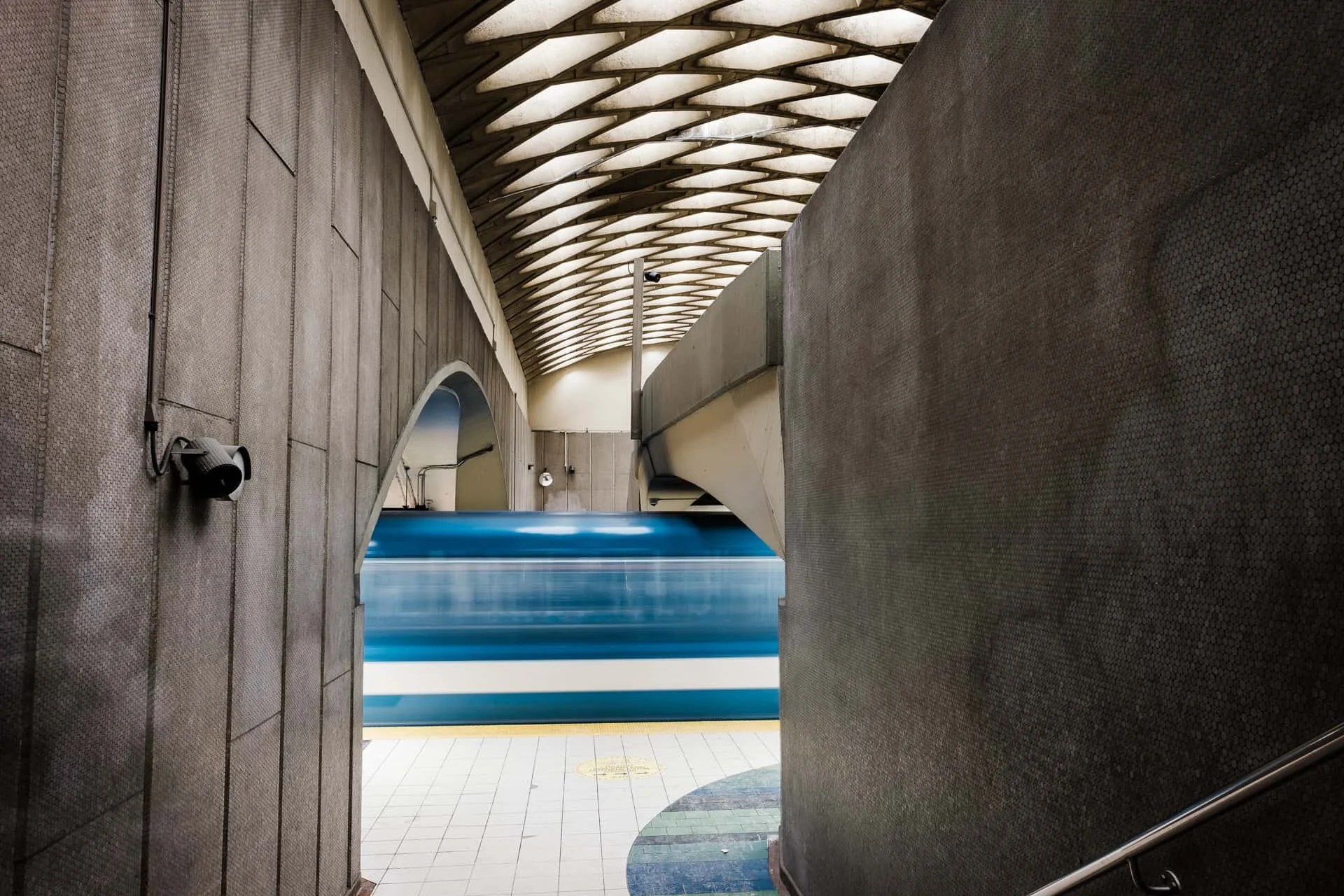
A city remembered underground.
I spent about half my life growing up in and around Montréal, Québec. Riding the Métro was a big part of that — to college, downtown, up to the Plateau where I eventually lived. I haven't called the city home for many years, but whenever I return and ride the Métro, none of it has really changed. The sounds, the smells. It is like stepping back into another life.
For this project I set out to capture a series of long exposure photographs inside several of the stations — using slow shutter speeds to let the trains blur into streaks of blue while the architecture holds still. In researching the stations, I discovered a history far richer than I expected.
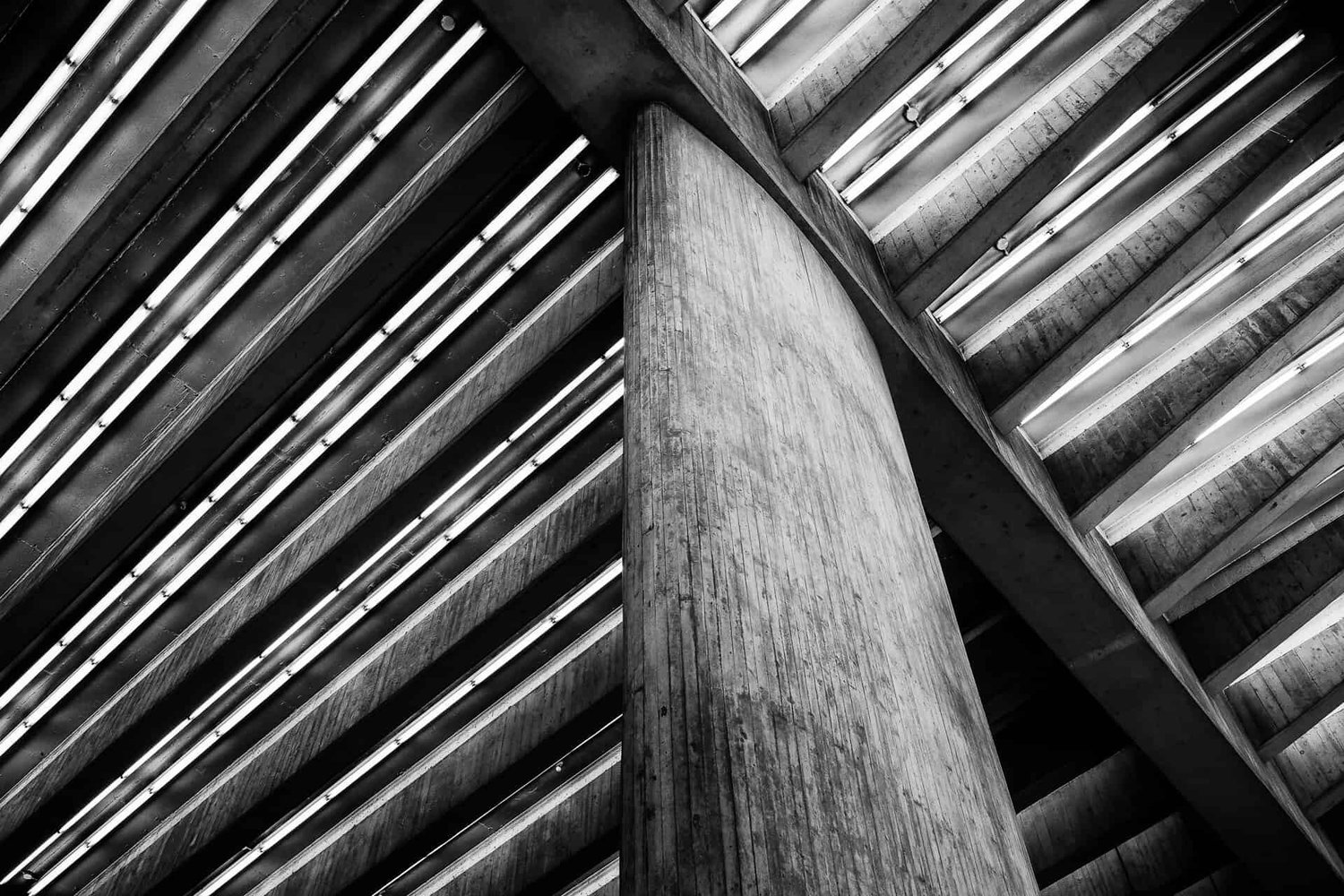
The main system was designed in the 1960s and the dominant influence is Brutalist architecture — raw, rugged, deliberately unadorned. But what makes the Montréal Métro remarkable is that each station was assigned its own designer, creating a network of surprising variety. No two stations look the same.
Four stations. Four visions.
Each station in the Montréal Métro was designed by a different architect, resulting in a network unlike any other in the world. This series covers four of them — each one a distinct architectural statement.
Adalbert Niklewicz
LeMoyne, Bland,
Edwards & Shine
Claude Vermette
Janusz Warunkiewicz
National
Museum
Kraków
MNK
Selected images from this series are held in the permanent collection of the National Museum in Kraków.
The Muzeum Narodowe w Krakowie features an exhibition on Polish modernist architecture and design after 1945, with a dedicated section on Polish architects working abroad. This work — documenting two Montréal Métro stations designed by Polish architects Adalbert Niklewicz (Champ-de-Mars) and Janusz Warunkiewicz (Place D'Armes) — is part of that permanent collection.
Métro
Champ-de-Mars
Adalbert Niklewicz
National Museum Kraków · Collection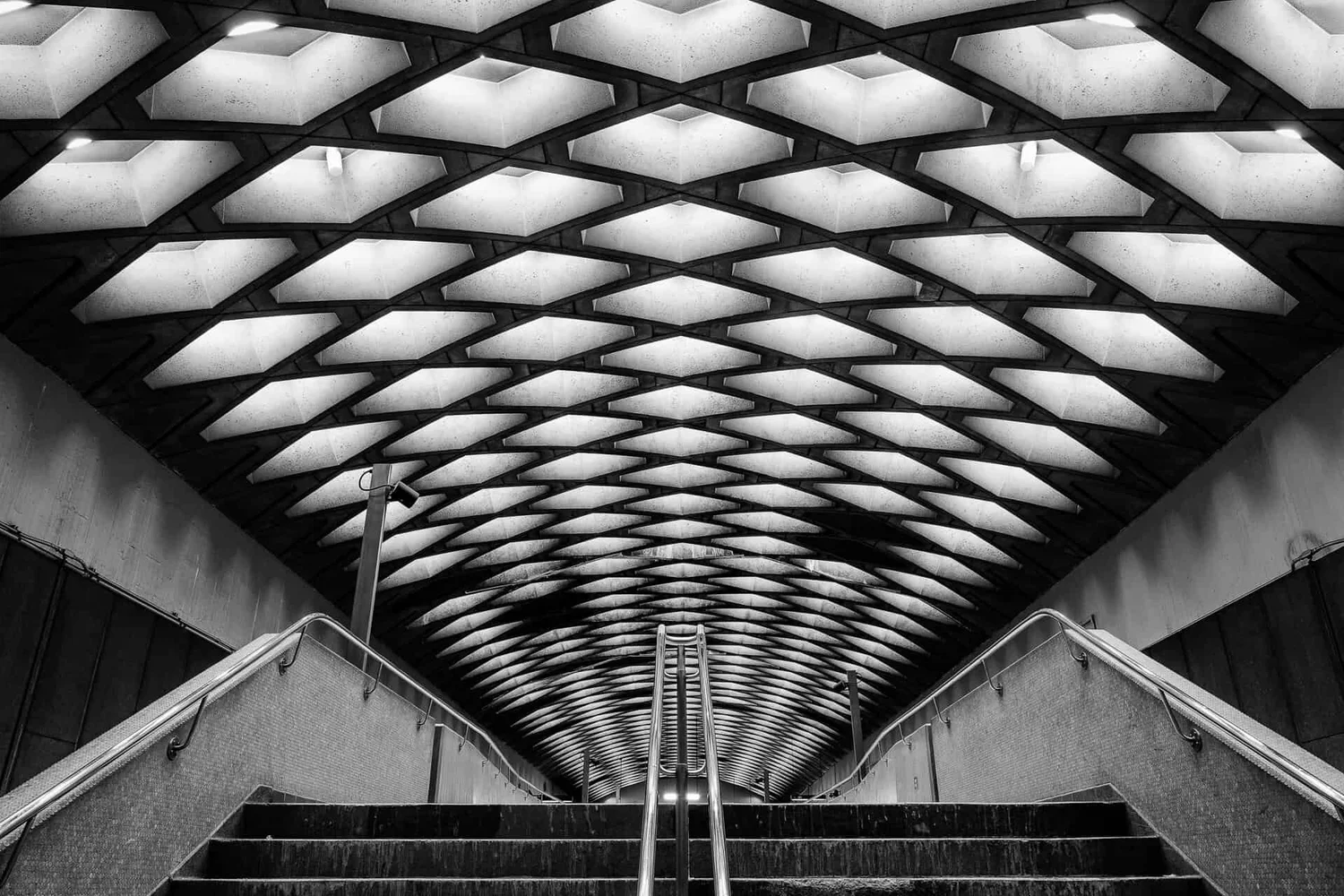
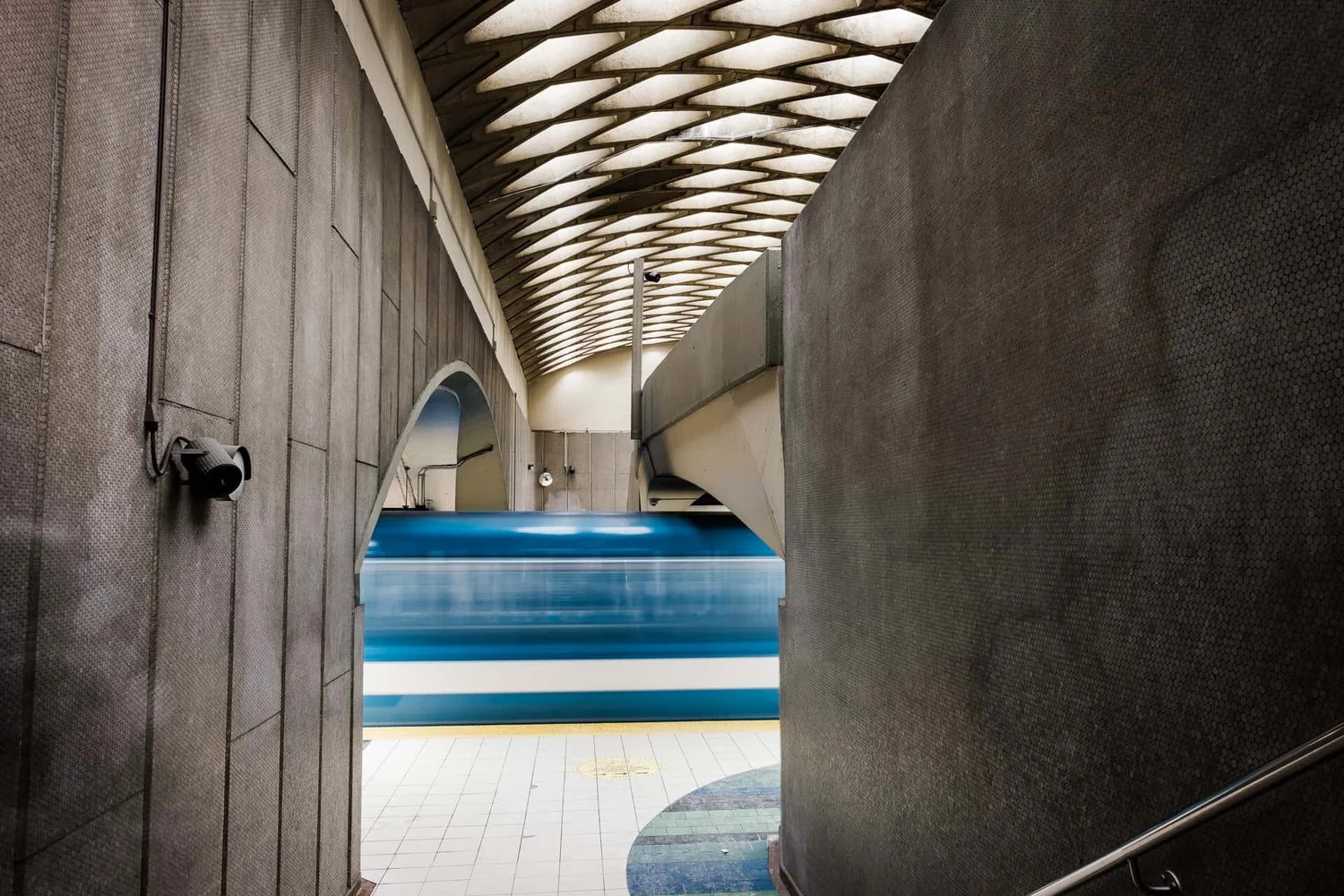
Niklewicz's design is defined by its curved teal tile walls and the dramatic interplay between the enclosed corridor and the open atrium above the platform — raw concrete softened by colour and curve.
Métro
Jarry
LeMoyne, Bland,
Edwards & Shine
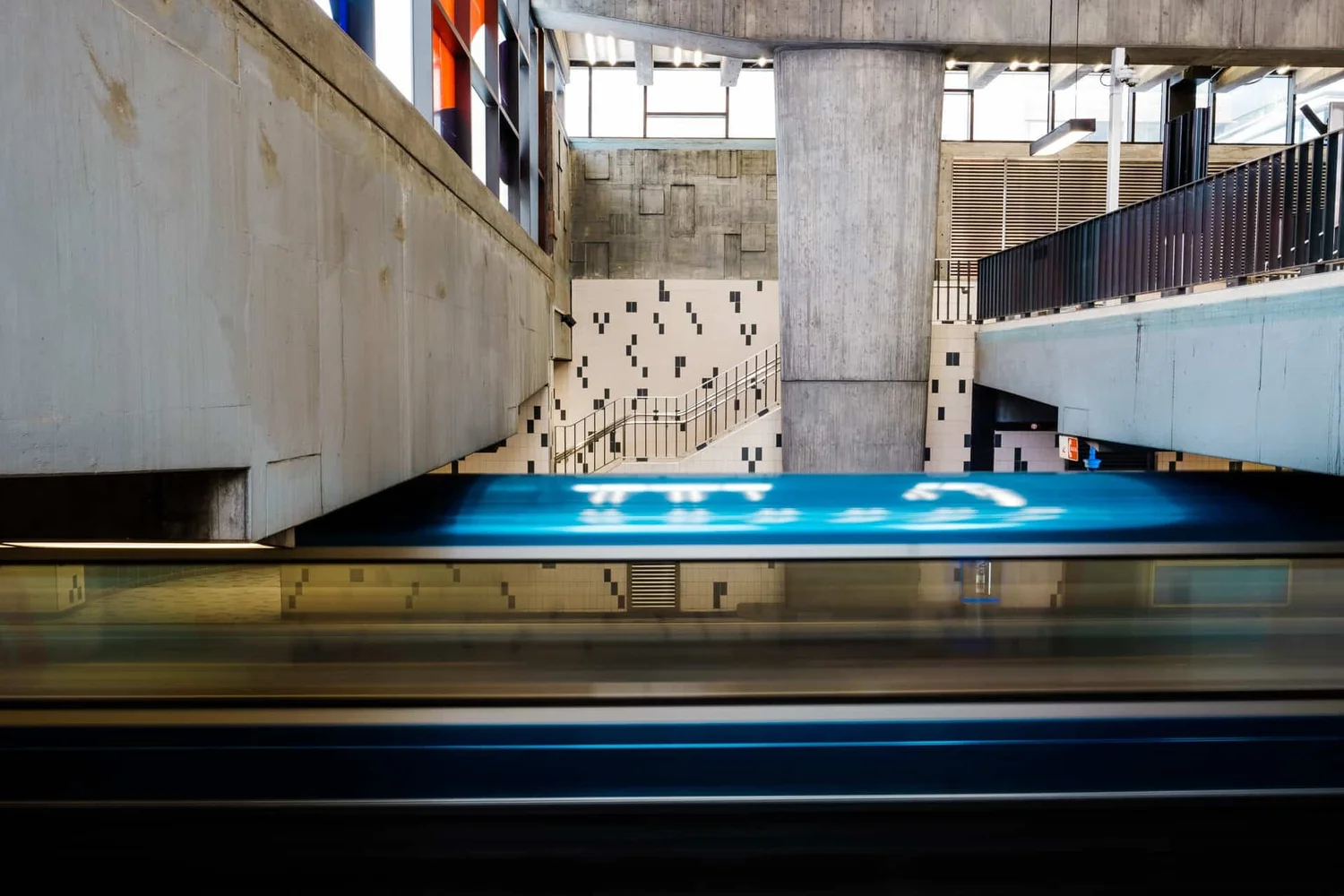
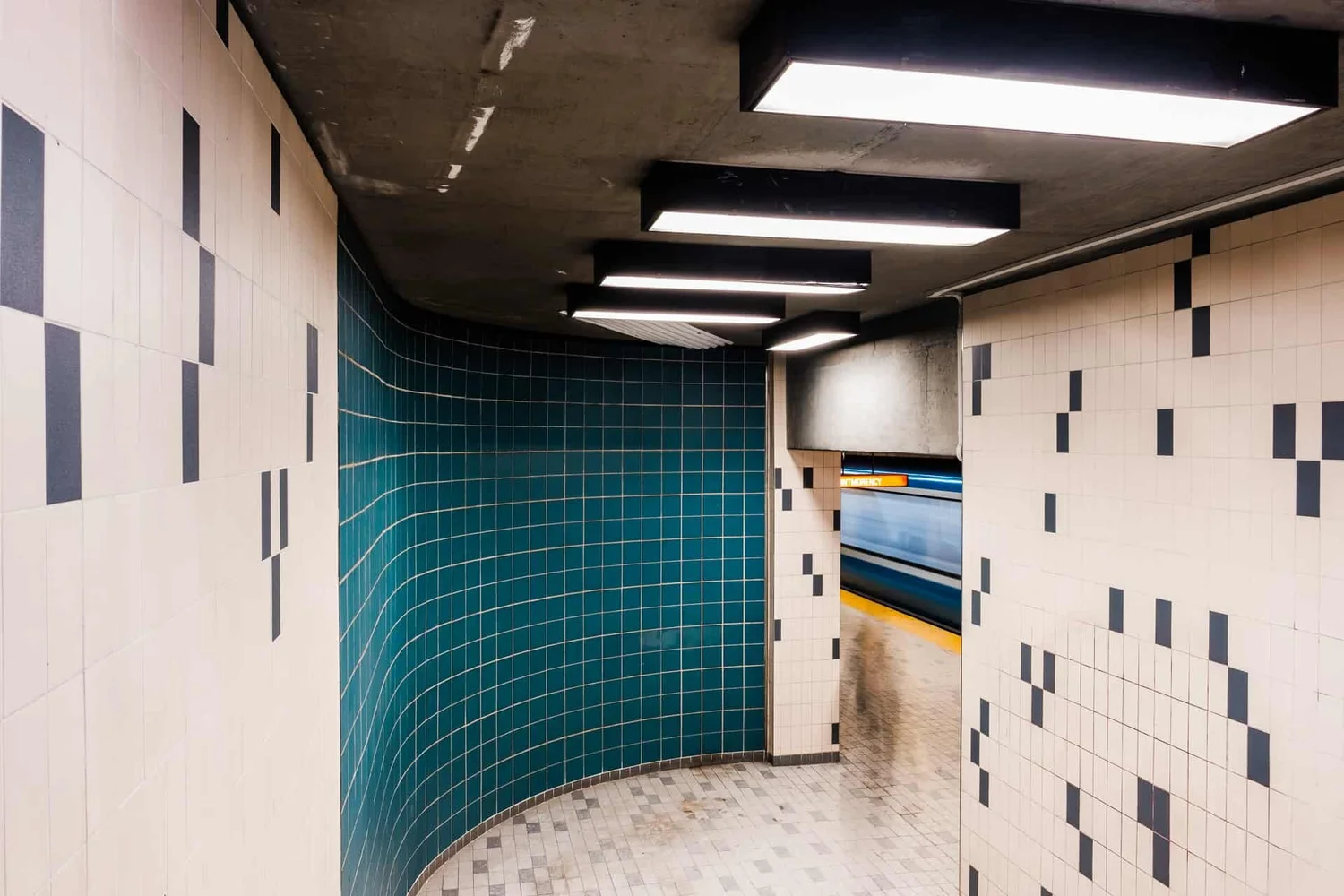
Jarry's vaulted ceiling — a repeating diamond lattice of precast concrete — creates an almost gothic sense of procession. The long escalator descent below it is one of the most photographically compelling sequences in the system.
Métro
Beaubien
Artist
Claude Vermette
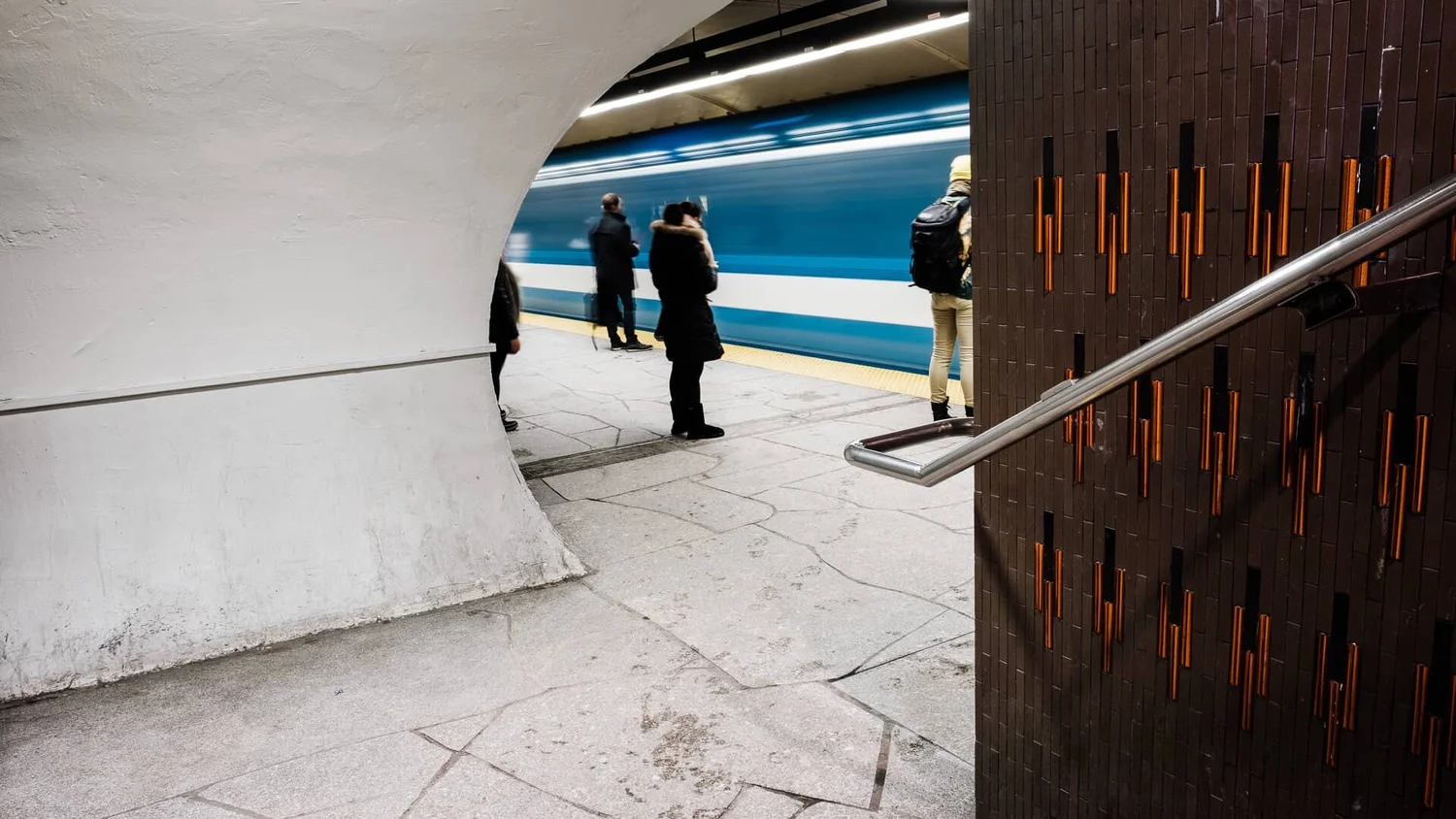
Beaubien is the most human station in this series — the white arch frames commuters waiting for a train that has already arrived, while Vermette's distinctive orange-and-brown tile relief wall anchors the scene. The contrast between the stark curve and the intricate decorative surface makes this station unlike any other in the network.
Place
D'Armes
Janusz Warunkiewicz
National Museum Kraków · Collection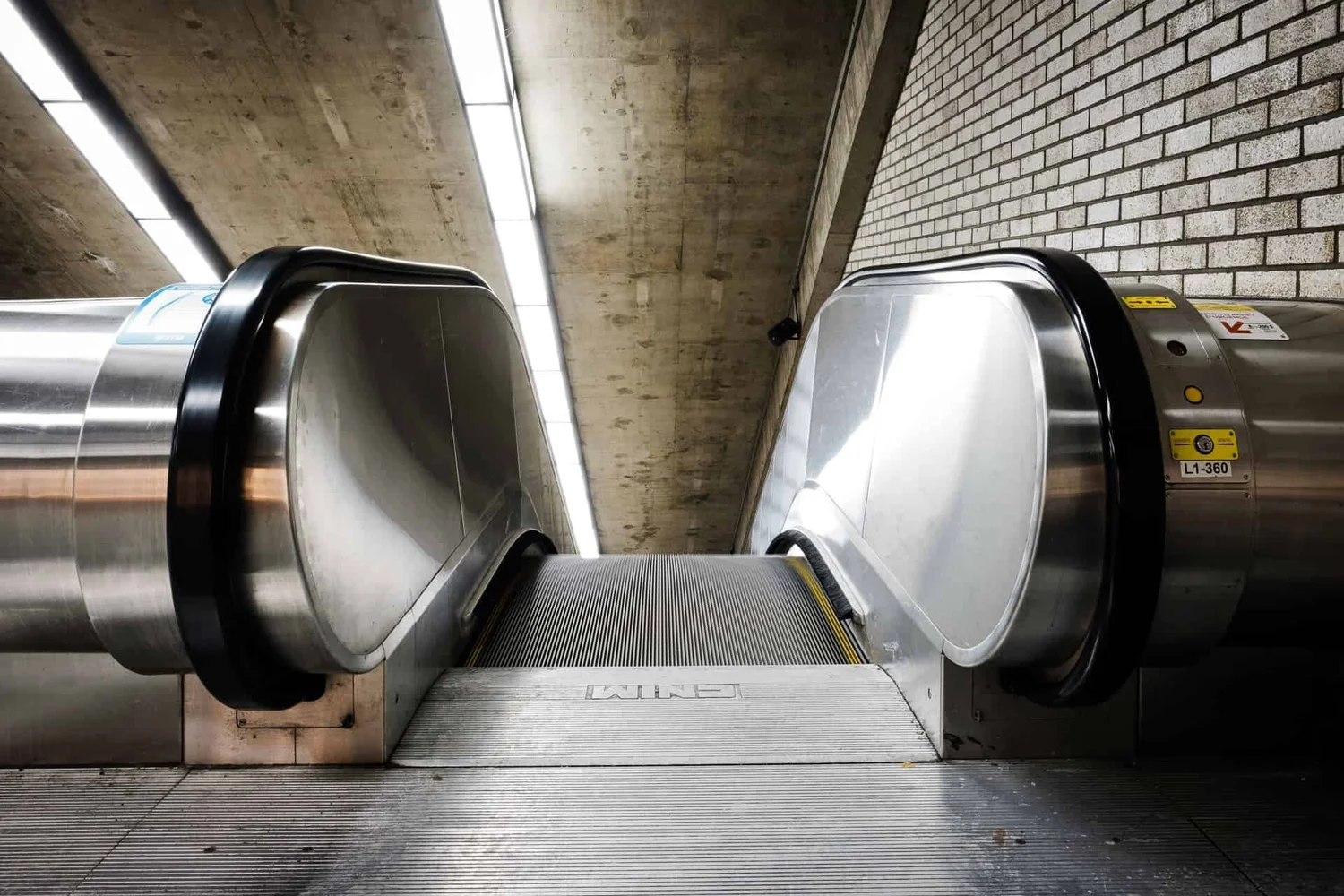
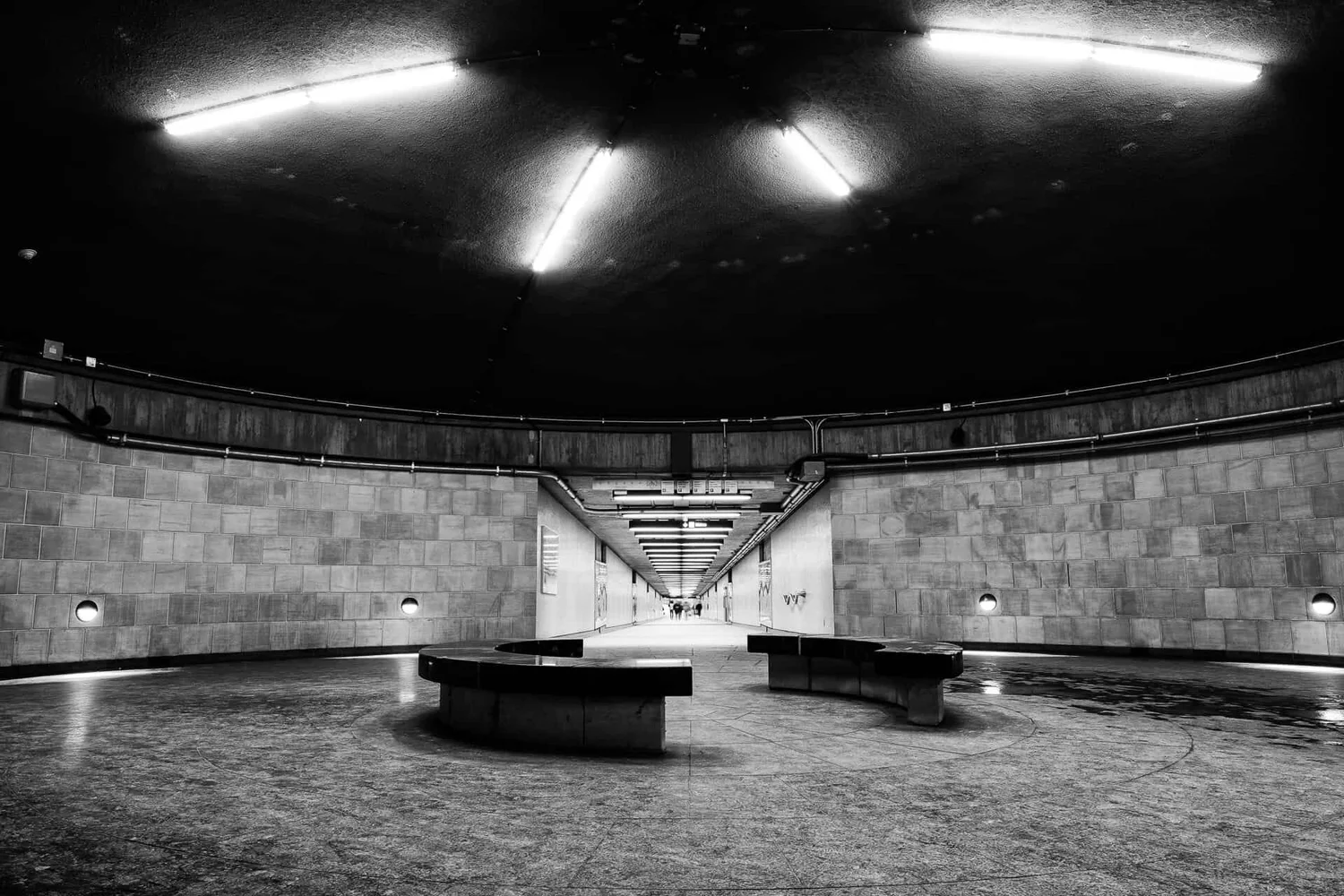
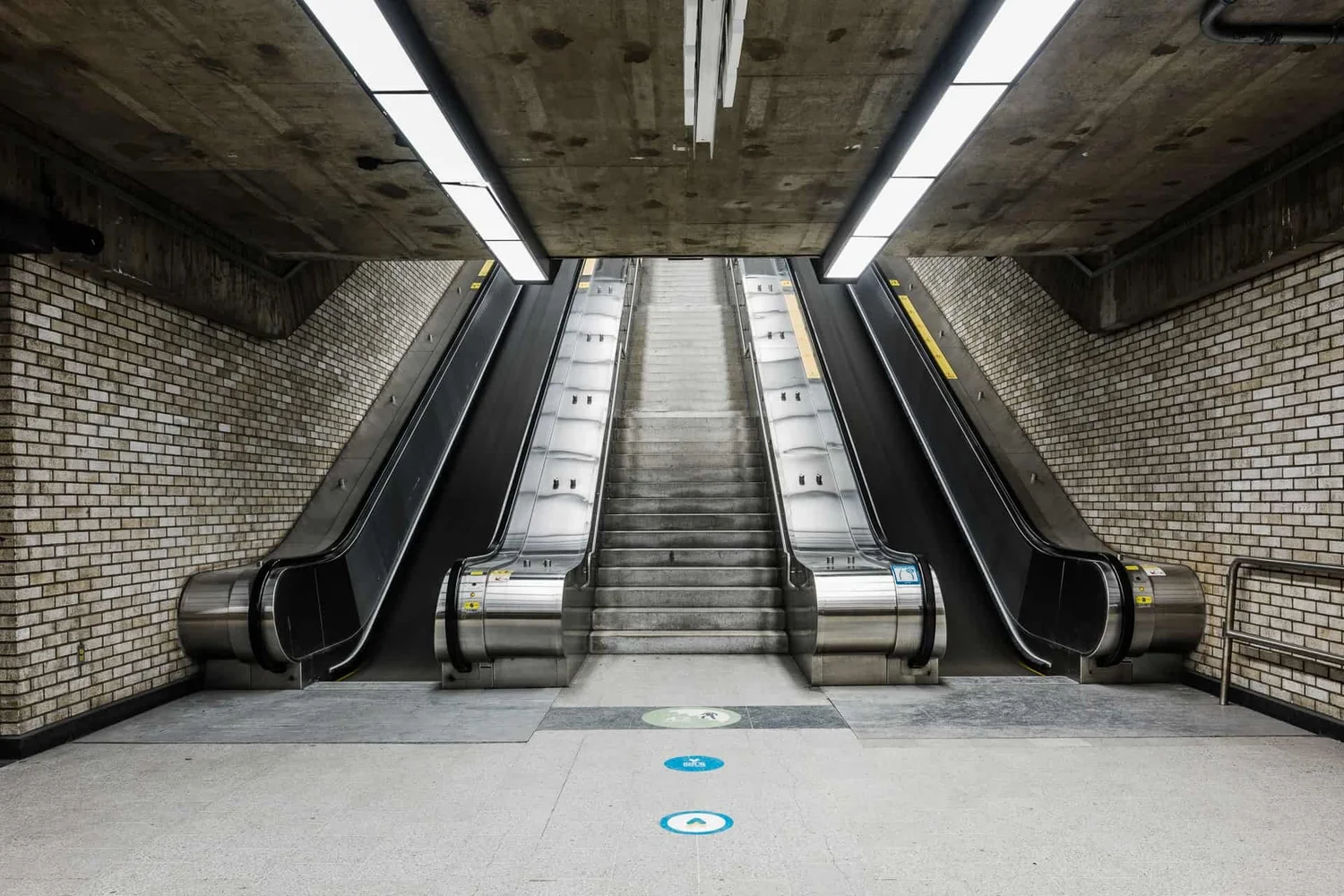
Warunkiewicz's Place D'Armes is the most spatially ambitious station in the series. The circular concourse — a vast, column-free rotunda — feels unlike anything else in the system. The symmetry of the escalators and the rhythmic brick walls reveal an architect thinking at an urban scale, not just a transit one.
Two Polish architects.
One city. Underground.
Polish Modernist Architecture Abroad · Post-1945
Adalbert Niklewicz
Polish architect · MontréalNiklewicz brought a distinctly European sensibility to Champ-de-Mars — the sweeping curve of teal tile, the interplay of colour against raw concrete, the dramatic reveal of the open platform. The station is a study in how Brutalism can be made warm.
Janusz Warunkiewicz
Polish architect · MontréalWarunkiewicz's Place D'Armes demonstrates a command of civic scale rarely seen in transit architecture. The circular rotunda — column-free, symmetrical, monumental — is a public space that happens to contain a station, not a station that happens to include public space.
The National Museum in Kraków (Muzeum Narodowe w Krakowie) holds a permanent exhibition on Polish modernist architecture and design after 1945, with a dedicated section exploring the work of Polish architects who built abroad. Selected photographs from this series — documenting the Montréal stations of Niklewicz and Warunkiewicz — are part of that collection, connecting work made underground in Québec to the broader story of the Polish diaspora in architecture.
Things you didn't know about the Montréal Métro.
The distinctive smell of the Montréal Métro comes from the oil used to treat the system's unique wooden brake shoes — a feature found on no other metro system in the world.
The three-note chime heard before a train departs is produced by a device called a 'peak chopper' — its purpose is to prevent a power surge when multiple trains depart simultaneously.
The entire Métro network is operated by employees in a secret location somewhere in downtown Montréal. To protect the system's security, the exact location has never been made public.
This project continues.
More stations to document. A second part shot on 120 film with a Mamiya 645 — coming in a future update.
Captured digitally on a Fuji XT2 with a 16mm lens. Film version to follow.