The Difference Between a Headshot and a Portrait (And Why Creatives Need Both)

If you're a working creative — an actor, musician, artist, writer, or maker of any kind — you've probably thought about your headshot at some point. Maybe you have one. Maybe it's a few years old and you've been meaning to update it. Maybe you've convinced yourself it's fine.
But here's a question worth sitting with: do you have a *portrait*?
Not a headshot. A portrait.
Most creatives don't. And it's quietly costing them.
They're not the same thing
A headshot and a portrait are both photographs of a person. Beyond that, they're doing completely different jobs.
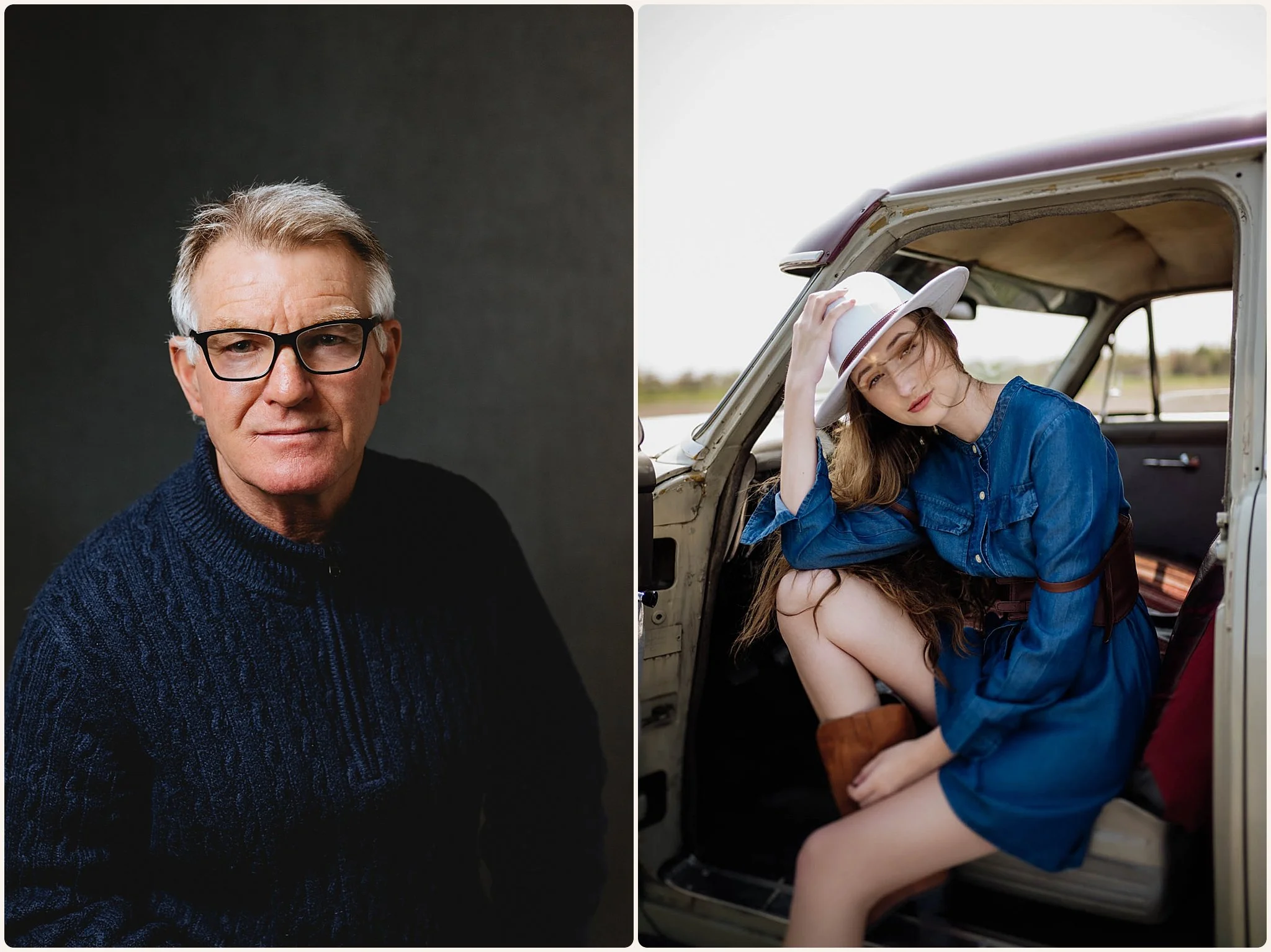
**A headshot is functional.** It answers a simple question: who are you, and can I trust you? It's the photo that goes on your LinkedIn, your email signature, your agency submission, your speaker bio. It needs to be clear, professional, current, and unambiguous. People need to be able to look at it and immediately understand who they're dealing with.
A great headshot is a quietly powerful thing. But it's not trying to do too much. It's a handshake, not a conversation.
**A portrait is expressive.** It answers a different question entirely: *what kind of person are you, and why should I care?* It has mood. It has context. It has a point of view. Where a headshot gives people permission to trust you, a portrait gives them a reason to be *interested* in you.
Think of the difference between a musician's press kit photo and their album cover. Both are portraits of the same person. One is a headshot — clean, clear, professional. The other is a portrait — it tells you something about the music before you've heard a single note.
Why creatives often only have one or the other
Most people default to headshots because headshots are what they've been told they need. Casting directors want headshots. LinkedIn wants headshots. The conference wants a headshot for the program.
So creatives get a headshot — often a serviceable one — and call it done.
The problem is that a headshot alone can't carry your whole identity as a creative. It can tell people you're professional. It can't tell them you're interesting. It can open a door. It can't make someone want to walk through it.
On the other end, some creatives — especially visual artists and musicians — lean entirely into expressive portraiture. They have stunning, atmospheric images that communicate exactly who they are artistically. But when they need something to send to a gallery, a publication, or a potential collaborator who wants to put a face to a name, those images don't quite land. They're too much — too stylized, too context-specific, not immediately legible as *this is who I am in a professional context.*
Both without the other leaves a gap.
What you can actually do with each
With a strong headshot, you can:
- Submit to casting calls, agencies, and directories
- Fill out your LinkedIn, your website bio, your speaker profile
- Send a clean, professional image when someone asks "can you send me a photo?"
- Show up consistently across every platform in a way that builds recognition
With a strong portrait, you can:
- Lead with your personality before anyone has heard you play, read your work, or seen your art
- Create a visual identity that extends your creative brand across social media, press features, and your website
- Give journalists, bloggers, and collaborators an image that's actually worth publishing
- Connect with your audience on an emotional level before they've experienced your work directly
The headshot gets you taken seriously. The portrait gets you remembered.
How they work together
The most strategically well-positioned creatives I photograph have both — and they use them deliberately.
The headshot is their workhorse. It goes everywhere professional. It's consistent, current, and clear.
The portrait is their signature. It's the image that ends up on the front page of the arts section. It's the photo that gets shared. It's the one that makes someone screenshot it and send it to a friend with no caption needed.
Together, they cover every context. You're never scrambling for a photo that will "work" for a particular use. You have the right image for every moment — the one that opens the door, and the one that makes people glad they walked through it.
What this looks like in practice
When I photograph a creative client, we almost always build both into the session — even if they came in thinking they only needed one or the other.
We'll start with the headshot work: clean backgrounds, direct connection with the camera, the kind of images that communicate confidence and professionalism without distraction. Then we'll shift — change the light, change the environment, bring in elements that feel specific to who this person is and what they make. Let the session breathe a little. That's usually where the portraits happen.
By the end, my clients leave with images that can go anywhere. The professional stuff and the personal stuff. The handshake and the conversation.
Because you shouldn't have to choose between looking professional and looking like yourself. You're both.
Ready to get both?
