How to Prepare for Your Portrait Session
You've booked your session. Maybe you're excited. Maybe you're a little nervous. Maybe you've already started mentally cataloguing every photo of yourself you've ever hated and wondering if this will be more of the same.
It won't be. But let's make sure of it.
Here's everything you need to know before you arrive — starting with the stuff that matters most, and ending with a practical checklist you can actually use.
Start here: the most important thing isn't what you wear
Most people spend the most time thinking about the wrong things before a portrait session. They obsess over outfits, worry about their hair, wonder if they should get a haircut. All of that matters, and we'll get to it. But none of it is the most important thing.
The most important thing is how you feel when you walk through the door.
A portrait session asks something of you that most people don't expect: it asks you to be present. Not performing, not posing, not managing how you look — just present. Available. Willing to let something real show up on camera.
That sounds simple. It's actually harder than picking the right outfit. And it's the difference between photos that look technically fine and photos that actually feel like you.
So the real preparation starts before you think about clothes.
The mindset work
Give yourself permission to not look perfect.
The best portraits don't come from people who've figured out their angles. They come from people who've stopped worrying about their angles. Counterintuitively, the less you try to control how you look, the better you tend to look.
I'm going to be directing you throughout the session. You don't need to know what to do with your hands or how to hold your face. That's my job. Your job is to show up and trust the process.
**Think about how you want to feel in the photos, not how you want to look.**
Before your session, spend a few minutes with this question: *what do I want someone to feel when they see these images?* Confident? Warm? Serious? Creative? Approachable? A little mysterious?
You don't need to have a perfect answer. But having a sense of the feeling you're going for gives us something to work toward together. It's a better conversation starter than "I want to look good," which, while completely understandable, doesn't give us much to work with.
Come rested.
This one is practical but it matters. A tired face is a tired face. If you can, get a good night's sleep before your session. Drink water the morning of. Do whatever you need to do to feel like yourself — not a depleted, behind-on-everything version of yourself.
**Plan to give yourself time.**
Don't book anything stressful immediately before your session. Don't arrive rushing. If you can, build in a few extra minutes to arrive, take a breath, and settle in. The first ten minutes of a session are often the least relaxed — give yourself room to warm up.
What to wear
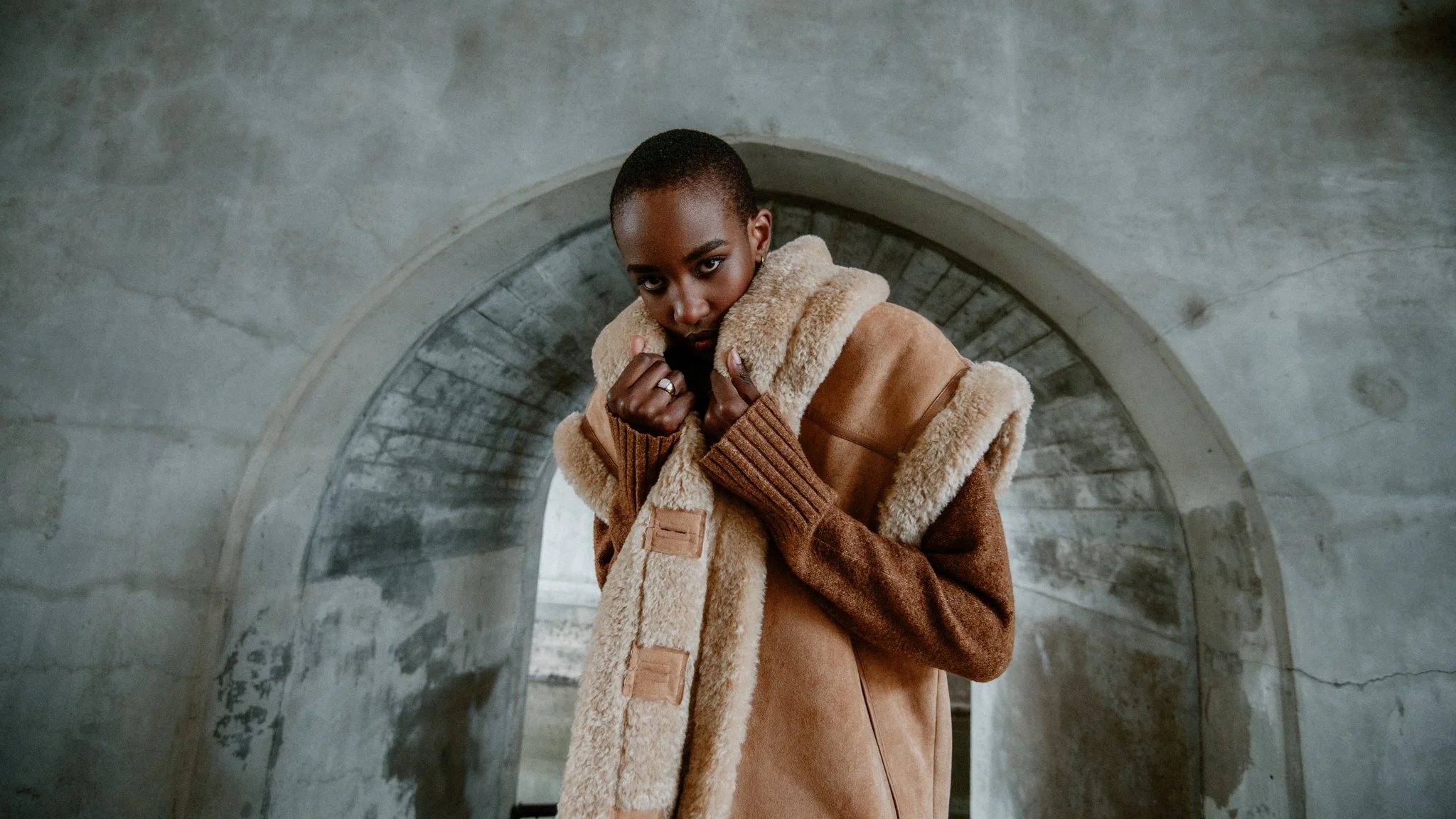
Clothing is communication. What you wear in your portraits tells people something about who you are — or who you want to be seen as. Think about that before you open your closet.
Start with intention, not inventory.
Instead of looking at what you own and trying to figure out what works, start by asking: what do I want these images to say? Professional and sharp? Creative and distinctive? Warm and approachable? Then find clothes that say that.
Bring options.
I always recommend bringing two or three complete outfits to a session. Not twenty — that creates decision fatigue and wastes time. Two or three, chosen with intention. We'll pick together once you're here and I can see them in the actual light.
What works on camera:
- Solid colours, particularly deeper tones — navy, forest green, burgundy, charcoal, warm neutrals
- Simple textures — linen, knit, a well-cut cotton — that read as interesting without being distracting
- Clothes that fit well and that you feel confident in
- Layers, which give us flexibility (jacket on, jacket off, different looks from the same session)
What to be careful with:
- Very bright whites or neon colours, which can affect the light and draw the eye away from your face
- Busy patterns — small checks, narrow stripes, and dense prints can create a visual effect called moiré that looks strange on camera
- Clothes you're not comfortable in — if you're constantly adjusting or self-conscious about what you're wearing, it will show
A note on grooming:
If you're considering a haircut, do it at least a week before your session — not the day before. Fresh haircuts can feel unfamiliar, and that discomfort can read on camera. Same goes for any significant changes to facial hair. You want to arrive feeling like yourself, not like a version of yourself you're still getting used to.
On the day
Eat something.
Sounds obvious, but low blood sugar makes people distracted and irritable. Have a proper meal or at least a solid snack before you arrive.
Bring a small kit.
For longer sessions especially, it's worth bringing: a comb or brush, blotting papers if your skin tends to get oily under lights, any lip product you typically wear, and a small bottle of water. You probably won't need most of it, but it's good to have.
Put your phone away.
Once we start shooting, phones are a distraction — both practically (the light from the screen, the pull of notifications) and psychologically (checking how you look in every photo mid-session is the fastest way to get in your own head). Trust the process. You'll see everything when we're done.
Tell me what you're thinking.
If something feels off — the light, the pose, something about the direction we're going — say so. This is a collaboration. The more you communicate, the better the work.
The practical checklist
Print this out or screenshot it. Go through it the night before.
Confirm:
- [ ] Session date, time, and location confirmed
- [ ] Travel time accounted for — plan to arrive 5–10 minutes early
- [ ] Nothing stressful scheduled immediately before
Outfits:
- [ ] 2–3 complete outfits chosen with intention (not just pulled from the closet)
- [ ] Each outfit includes shoes, any relevant accessories
- [ ] Everything steamed or ironed — wrinkles show more on camera than in real life
- [ ] No new clothes you haven't worn before — comfort matters
Grooming:
- [ ] Haircut done at least a week ago if needed
- [ ] Facial hair decisions made and settled
- [ ] Nails tidy if hands will be visible
Day of:
- [ ] Good night's sleep
- [ ] Water in the morning
- [ ] Proper meal or snack before arriving
- [ ] Small kit packed (comb, blotting papers, lip product, water)
- [ ] Phone on silent, ready to put away once we start
Mindset:
- [ ] Thought about how you want to *feel* in the photos
- [ ] Reminded yourself: directing is my job, showing up is yours
- [ ] Given yourself permission to not look perfect
One last thing
I've photographed a lot of people who came into a session convinced they weren't photogenic. People who told me, with genuine certainty, that they "never photograph well."
Almost without exception, they were wrong. What they'd experienced before wasn't their face being unphotogenic — it was a session where no one asked the right questions, took the time to build some ease, or created the conditions for something real to happen.
That's what I'm here for.
See you soon.
Booked and have questions?
(or ready to book?)
