Long Exposure Photography · Technique
Top 7 tips for steel wool spinning.
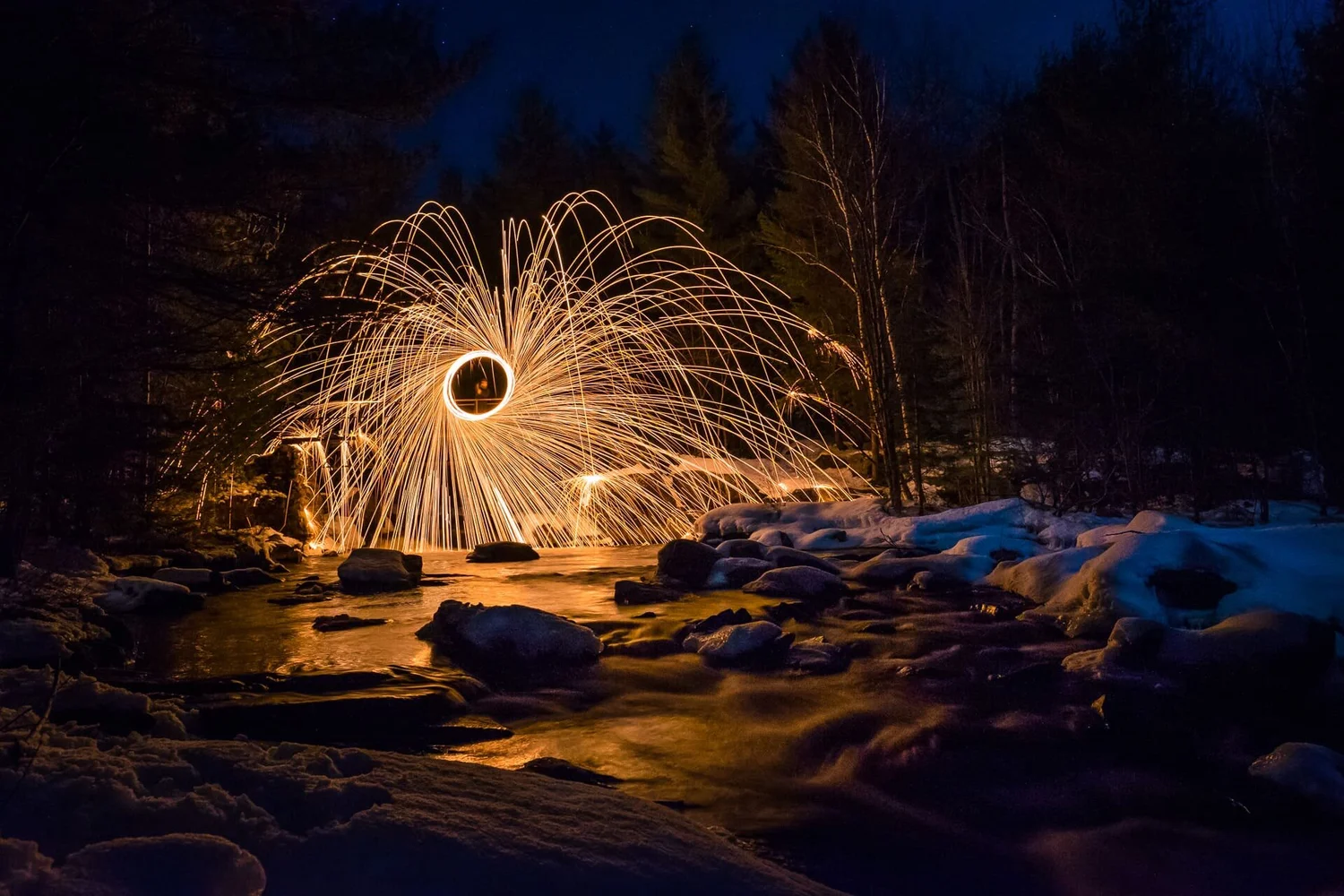
A photographer friend invited me out one winter evening to try steel wool spinning for the first time. I'd wanted to do it for a while — the technique creates something genuinely unlike anything else in long exposure photography. Burning steel wool spun on a rope, sparks flying in every direction, captured over several seconds of open shutter.
Here are the seven things I learned that night — and what I'd tell anyone picking this up for the first time.
This post contains affiliate links. If you purchase through them I may earn a small commission at no extra cost to you.
Steel wool spinning is a serious fire hazard. Burning fibres travel far and ignite easily. Always have a fire extinguisher on site. Wear protective glasses and gloves. Choose locations away from anything flammable. This technique has started major fires and destroyed landmarks. Please take it seriously.
The complete gear list.
Non-negotiable. Have one within reach before you open the steel wool.
Sparks travel further than you think. Glasses and gloves are mandatory.
Grade 0000 superfine burns cleanly and produces the best spark pattern. Coarser grades don't work as well.
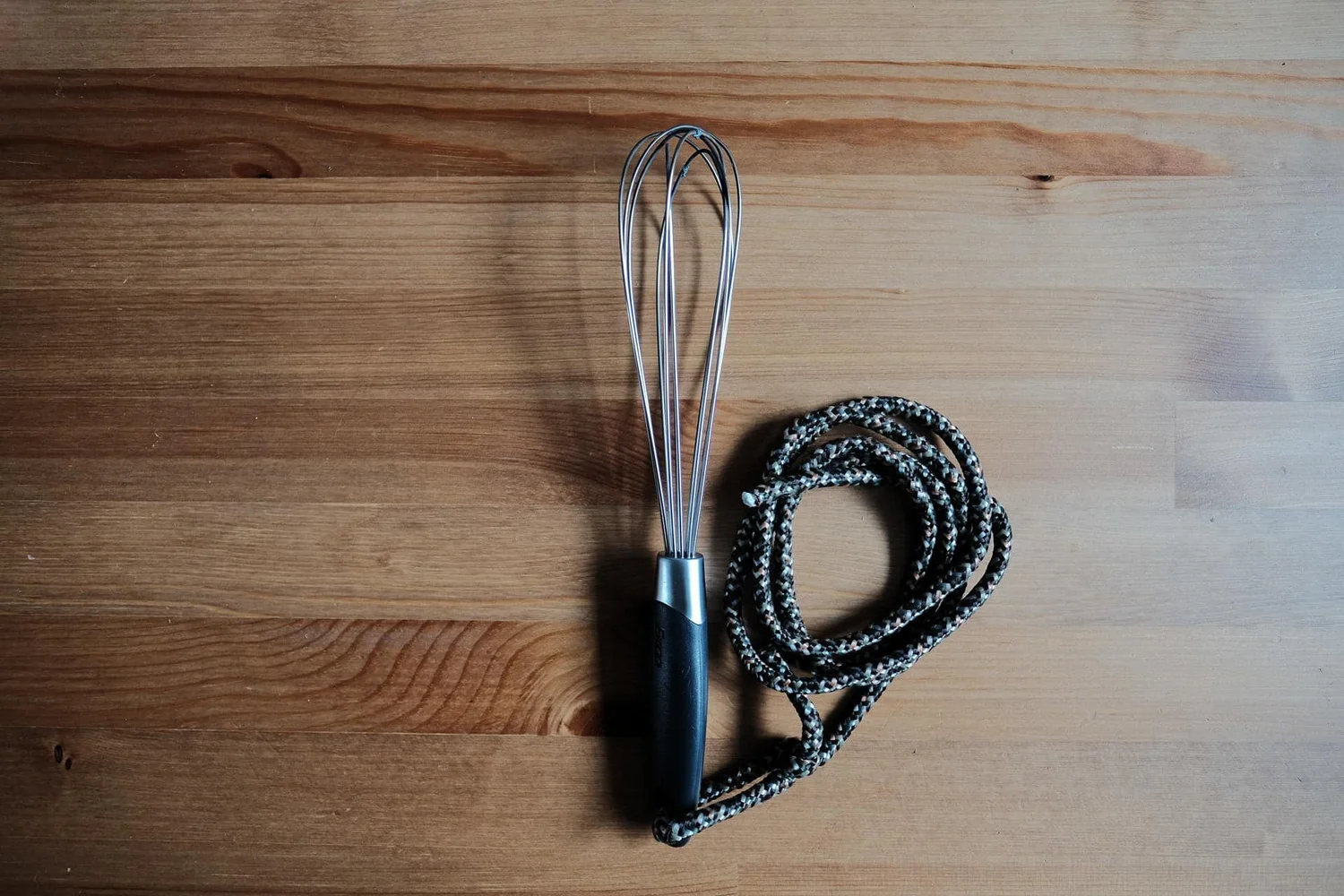
Steel wool packs into the whisk, which attaches to your rope or chain for spinning.
Attach the whisk to the end. Extra length lets you adjust spin radius on the fly.
More reliable than a standard lighter, especially in cold weather when lighters can freeze and fail.
Mandatory for long exposure work. Any stable tripod will do.
Eliminates camera shake at the start of exposure. Most modern cameras also support wireless triggering via their phone app.
The headlamp keeps your hands free. The flashlight is essential for setting focus on your subject in the dark.
We were scrambling over icy rocks on a frozen creek. Good waterproof boots made a real difference.

Setup, materials and ignition.
This is the single most important thing in this post. You will be sending burning metal fibres in all directions — stay far away from anything flammable. Over water is ideal. Bare concrete or rock works well. Dry grass, forest, and wooden structures are absolutely off limits.
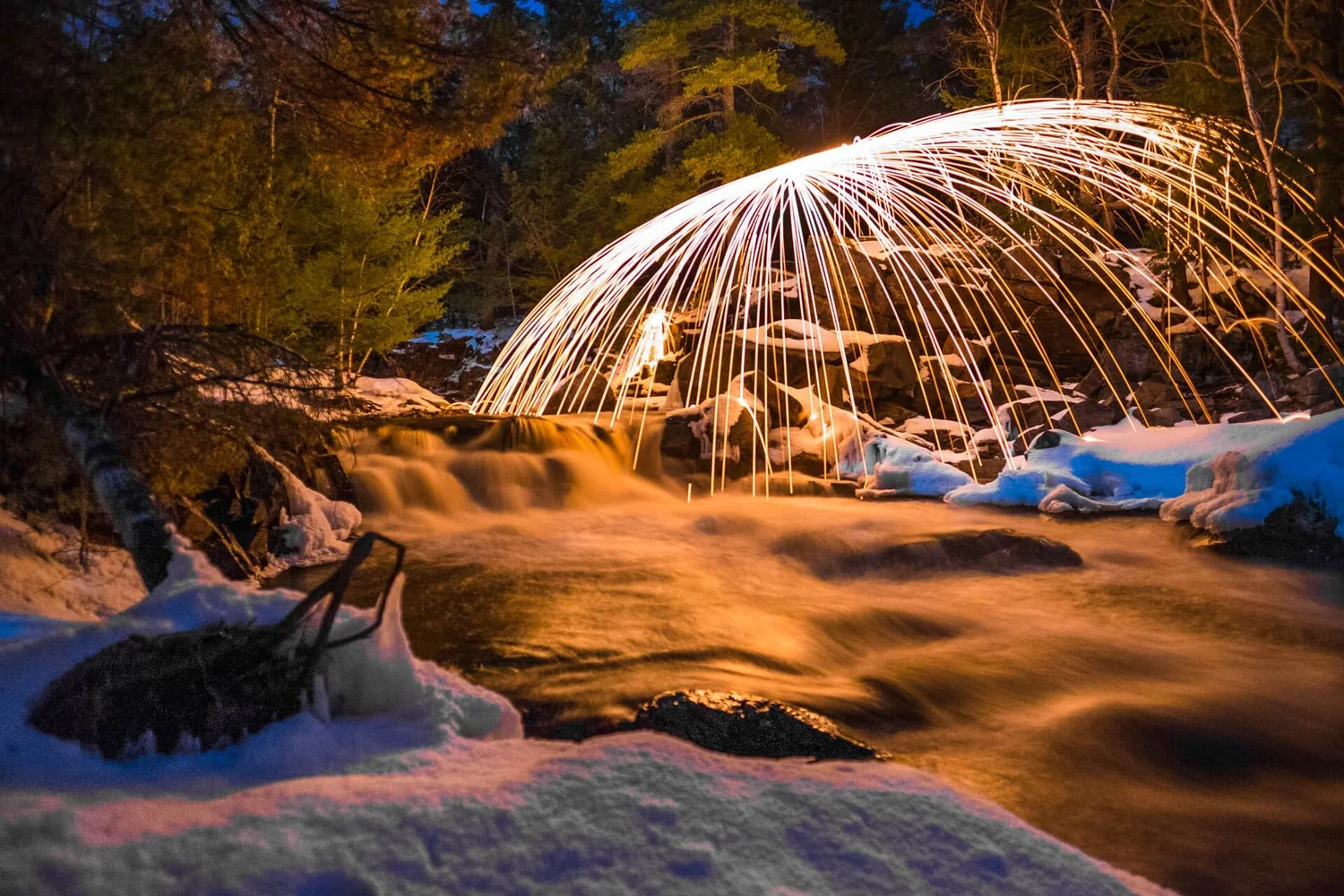
We shot over a creek in the middle of winter — virtually zero fire risk. That's the standard to aim for. Always have a fire extinguisher within reach, every single time.
The finer the wool, the better it burns and the better the spark pattern. Look for superfine grade 0000 — coarser grades simply don't produce the same results.
Stuff the steel wool into a metal whisk, then attach the whisk to the end of a paracord rope or metal chain. Extra rope length gives you the ability to adjust the spin wider or tighter on the fly. This is the method I used — and what you see in these photos.
A butane torch lighter is the most reliable way to ignite the steel wool fibres — they catch easily and quickly. Once lit, start spinning. The airflow from the spin feeds the burn, so the faster you spin, the faster the wool burns and the further the sparks fly.
One cold-weather tip: keep your lighter in an inside pocket to stop it freezing. My friend's lighter was frozen solid that night. Luckily mine wasn't.
Camera gear and settings.
A tripod is mandatory — long exposure handheld is not an option here. Use a remote shutter release to eliminate shake at the start of the exposure. Alternatively, set a 2-second self-timer so the camera settles before the exposure begins — that's what I did. Most modern cameras also have phone apps that do this wirelessly.
A strong flashlight is essential for setting focus on your subject before you shoot. You cannot autofocus in the dark. A headlamp keeps your hands free for adjusting settings.
Set your focus manually in advance — use your flashlight to illuminate the spinner and lock focus before they move into position. Once you switch to manual focus, don't let the camera hunt again.
Most of the images here were shot between 2–4 seconds. That range balances ambient light capture without overexposing the spinning sparks. Your exact settings will depend on your aperture, ISO, and how much ambient light remains — experiment early while the light is still changing.
Starting point — adjust for ambient light
Set before the spin, use flashlight to focus
Dial up ISO / open aperture as it gets darker
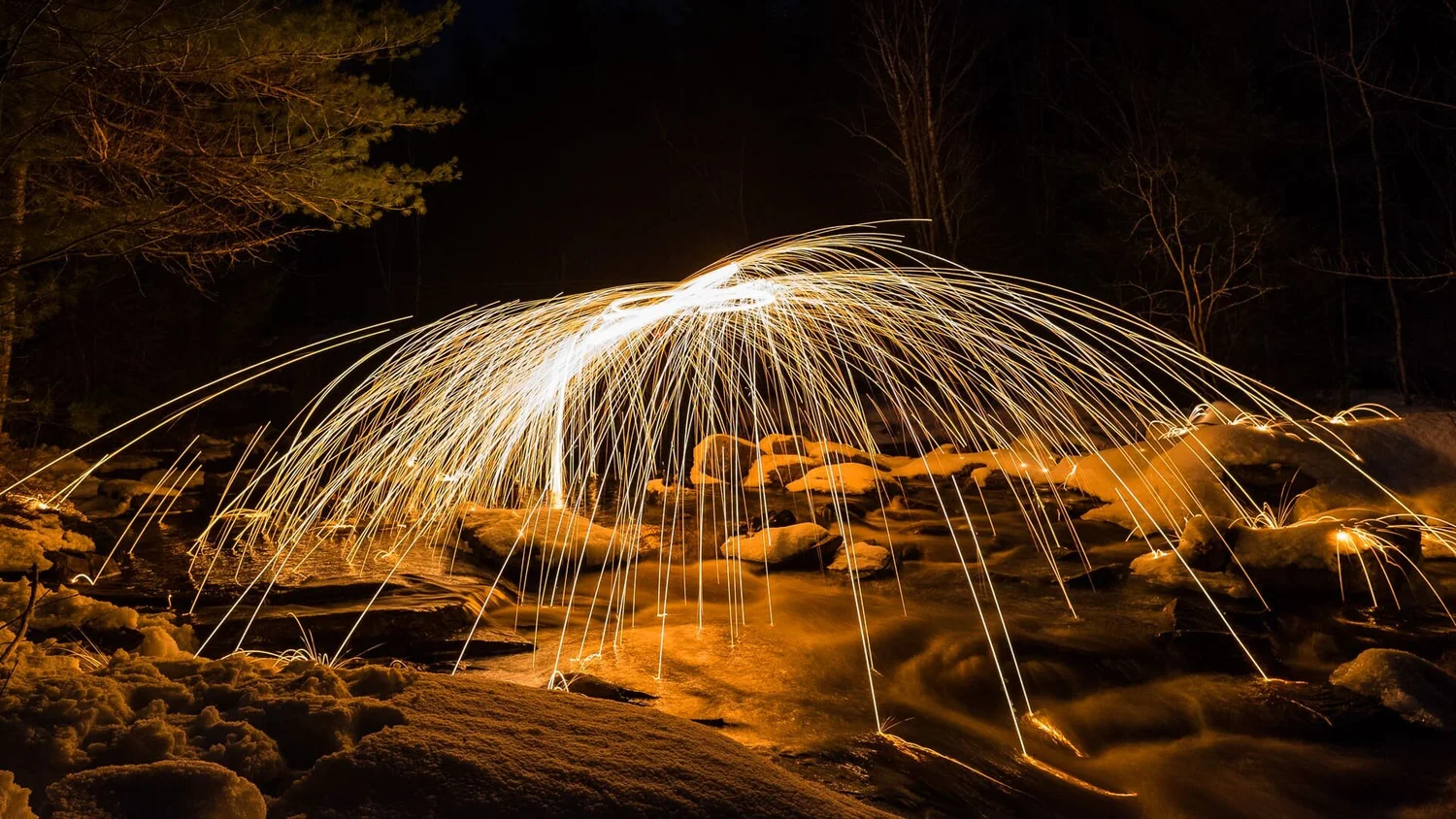
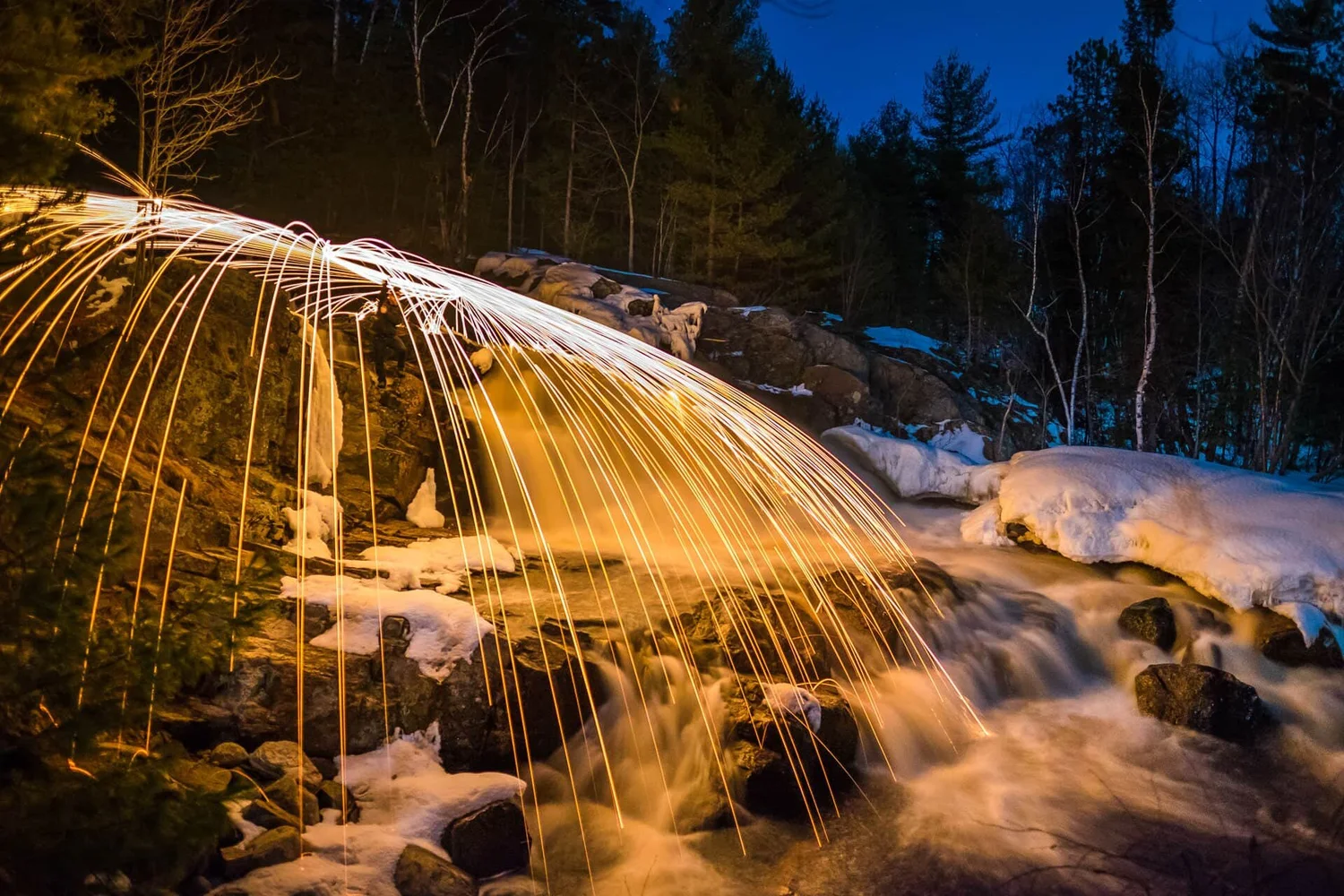
We were scrambling over icy rocks on a frozen creek in January. The technique was challenging, the conditions were brutal, and the results were unlike anything I'd made before.
On the nightBring a friend. Be patient.
You could technically do this alone, but it would be a serious challenge. One person shoots, the other spins — and having a second person is simply safer when you're creating a fire hazard in the dark. Wear protective glasses and gloves. It's also just a lot more fun.
Getting the right framing, focus, and exposure at night takes time. The steel wool itself can be unpredictable — sometimes it won't burn quite right, the spin will get interrupted, or the wool will fly out in a clump. Be patient, experiment, and treat each failed attempt as data.
Good waterproof boots are worth mentioning here — we were scrambling over icy rocks in the dark, and footwear made a real practical difference.
The camera body matters less than you might think. I was using a Fuji XT1 with a 16mm 1.4 lens that night. What matters is manual mode, a wide enough lens to get the full spin in frame, and a stable platform. Wide lenses are typical for this technique, but experiment with your framing.
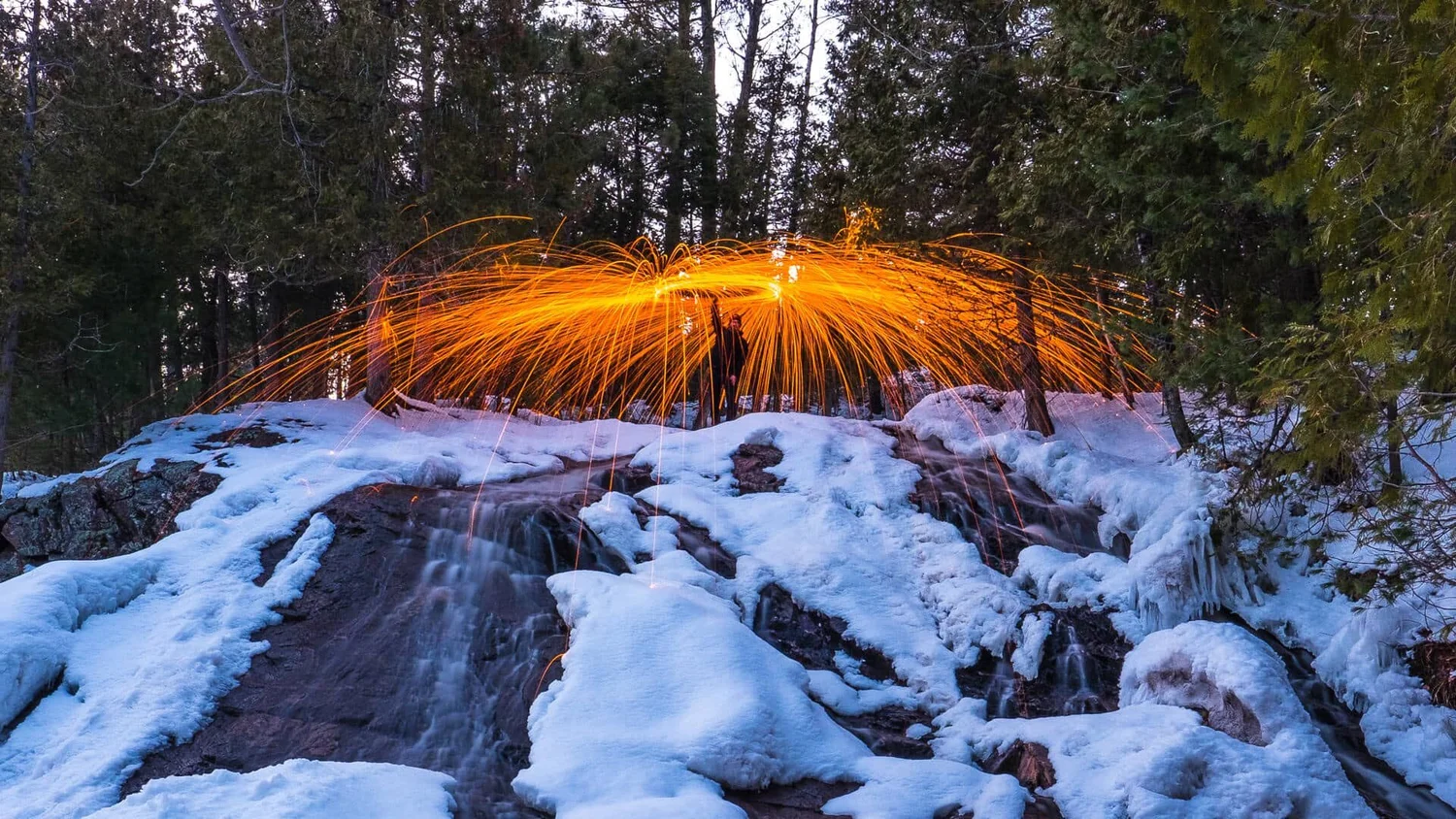
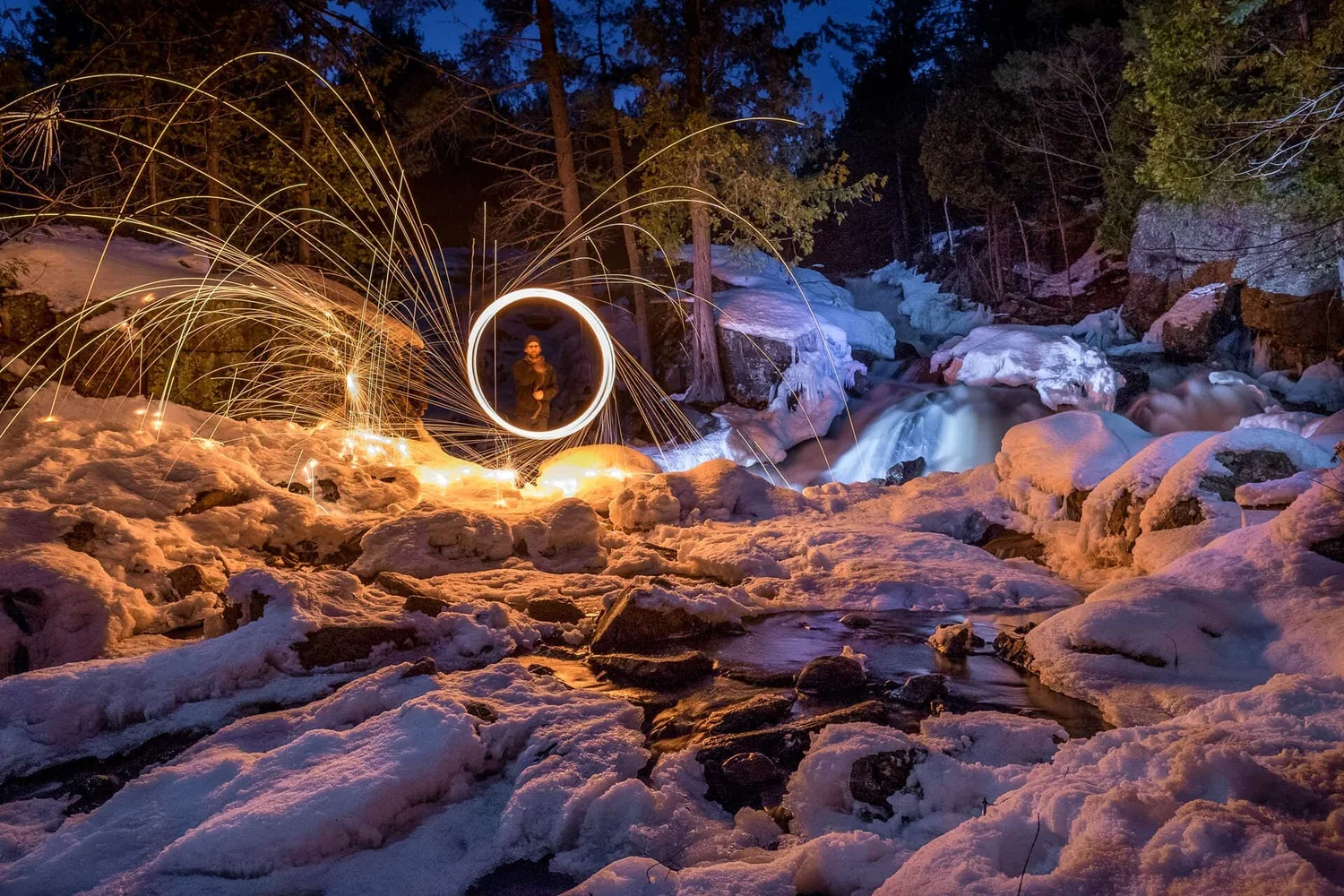
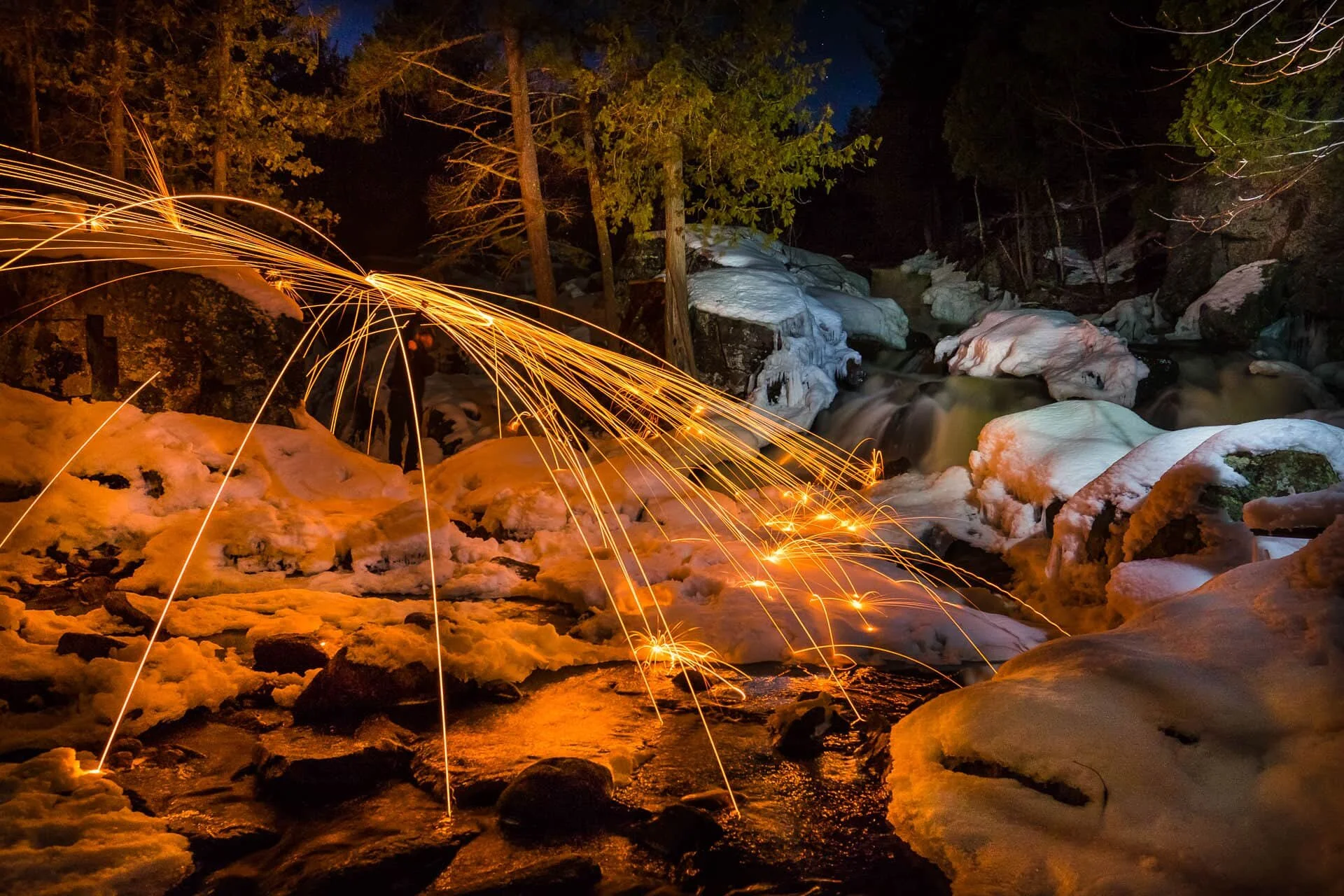
The body matters less than you think — but here's what I'd suggest.
Fuji X Series Mirrorless
FujifilmI shot the original images on a Fuji XT1, which is now discontinued. The current Fuji X Series mirrorless cameras are lighter, more capable, and still one of the best options for travel and long exposure work. Manual mode, excellent low-light performance, and a great lens ecosystem.
View Fuji X Series →EOS R50 Mirrorless
CanonThe Canon EOS R50 with the RF-S18-45mm lens is an excellent entry into mirrorless for this kind of work. Capable manual controls, reliable low-light performance, compact enough to travel with easily, and well-priced. A strong starting point if you're new to manual shooting.
View Canon EOS R50 →How I built the perfect inconspicuous camera bag.
A Herschel backpack and a padded insert — the DIY camera bag solution I've been using for over a decade.
Read the post →Ottawa & Gatineau portrait photographer.
Award-winning portrait and headshot sessions in Ottawa & Gatineau. 17+ years of experience — let's make something together.
See the work →Looking for a portrait photographer in Ottawa?
Portrait & headshot sessions · Ottawa & Gatineau · 17+ years · Award-winning